
Most people begin adjusting to hearing aids within a few weeks, but complete adaptation can take anywhere from two weeks to three months, depending on the degree of hearing loss, the type of hearing aid, and how consistently it is worn. Professional fitting, gradual daily use, and regular follow-up appointments help make the adjustment process more comfortable and successful.
| Quick Facts | |
| Best For | First-time hearing aid users and family members |
| Reading Time | 10–12 Minutes |
| Main Question | How long does it take to adapt to hearing aids? |
| Short Answer | Most people adapt within 2–12 weeks with regular use and professional support. |
| Key Topics | Adaptation timeline, common challenges, expert tips, realistic expectations |
About This Guide
Starting to wear hearing aids can feel exciting, but it also comes with an adjustment period. This guide explains what most people experience during the first few days, weeks, and months of wearing hearing aids. You’ll learn why your brain needs time to adapt, what challenges are normal, and how professional support can help you become comfortable with your hearing aids more quickly.
Who Should Read This Guide?
This article is ideal for:
- First-time hearing aid users.
- Family members supporting someone with hearing loss.
- People who recently purchased hearing aids.
- Anyone concerned about the adjustment process.
- Individuals comparing hearing care providers before buying hearing aids.
Introduction
One of the most common questions people ask after choosing hearing aids is:
“How long will it take before they feel natural?”
The answer varies from person to person, but one thing is true for almost everyone:
Adjusting to hearing aids is a process—not an overnight change.
If you’ve been living with hearing loss for months or even years, your brain has gradually adapted to hearing fewer sounds. When you begin wearing hearing aids, your brain suddenly starts receiving sounds it may not have heard clearly for a long time.
This includes:
- Birds singing.
- Footsteps.
- Running water.
- Rustling paper.
- Air conditioners.
- Keyboard clicks.
- Your own voice.
At first, these sounds may seem unusually loud or unfamiliar. This doesn’t mean your hearing aids are programmed incorrectly—it simply means your brain is learning to process sounds again.
The good news is that, with consistent use and professional support, most people gradually become comfortable with their hearing aids and begin noticing significant improvements in communication, confidence, and quality of life.
Quick Answer
For most people:
| Time | What to Expect |
| First Few Days | New sounds may seem louder or unusual. |
| Week 1–2 | Your brain starts recognising familiar sounds more naturally. |
| Weeks 3–6 | Conversations become easier, and listening requires less effort. |
| Months 2–3 | Most users feel comfortable wearing hearing aids throughout the day. |
Some people adjust more quickly, while others may need additional follow-up appointments to fine-tune their hearing aids.
Why Your Brain Needs Time to Adjust
Many people think hearing aids simply make sounds louder.
In reality, hearing aids help restore access to sounds your brain may have been missing for a long time.
Think of it like wearing a new pair of prescription glasses.
When you first wear new glasses, your eyes and brain need a short period to adjust to sharper vision. Hearing aids work in a similar way.
Your ears detect sound, but your brain is responsible for interpreting and understanding what you hear.
If hearing loss has reduced the amount of sound reaching your brain over time, your brain needs an opportunity to relearn how to recognise those sounds.
This natural process is known as auditory adaptation.
The better you understand this process, the more confident you’ll feel during your hearing journey.
What Influences How Quickly You Adapt?
No two people experience hearing loss in exactly the same way. Several factors can influence how long it takes to get used to hearing aids.
| Factor | How It Affects Adaptation |
| Degree of hearing loss | More significant hearing loss may require a longer adjustment period. |
| How long you’ve had hearing loss | Long-term untreated hearing loss can increase adaptation time. |
| Consistency of use | Wearing hearing aids every day helps your brain adapt more quickly. |
| Professional fitting | Correct programming and follow-up adjustments improve comfort and performance. |
| Lifestyle | People who regularly communicate in different environments often adapt more quickly. |
| Motivation | A positive attitude and realistic expectations support successful adaptation. |
Your Hearing Aid Adaptation Timeline
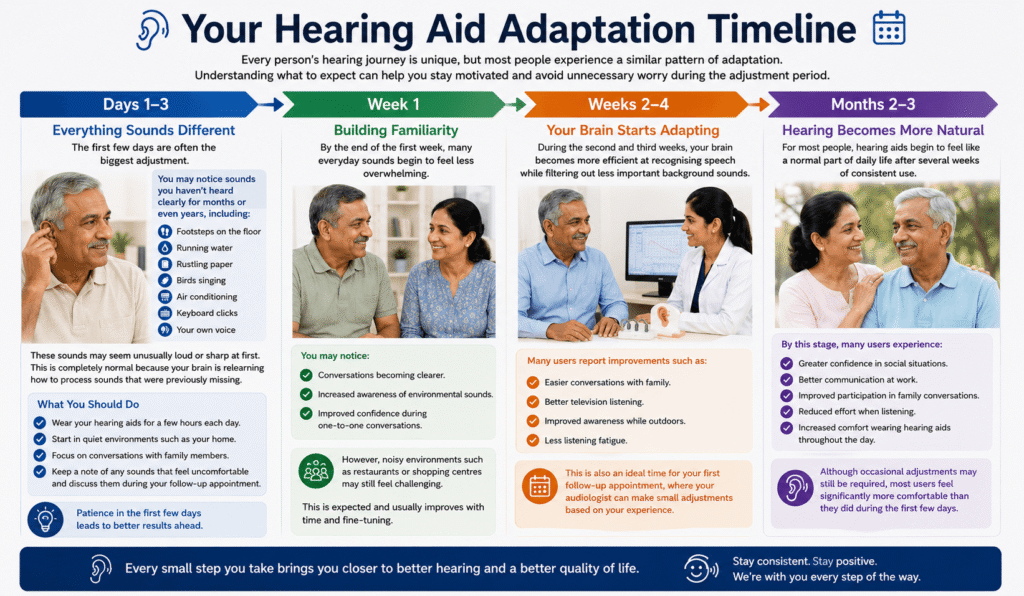
Every person’s hearing journey is unique, but most people experience a similar pattern of adaptation. Understanding what to expect can help you stay motivated and avoid unnecessary worry during the adjustment period.
Days 1–3: Everything Sounds Different
The first few days are often the biggest adjustment.
Many first-time hearing aid users notice sounds they haven’t heard clearly for months or even years, including:
- Footsteps on the floor.
- Running water.
- Rustling paper.
- Birds singing.
- Air conditioning.
- Keyboard clicks.
- Your own voice.
These sounds may seem unusually loud or sharp at first. This is completely normal because your brain is relearning how to process sounds that were previously missing.
What You Should Do
- Wear your hearing aids for a few hours each day.
- Start in quiet environments such as your home.
- Focus on conversations with family members.
- Keep a note of any sounds that feel uncomfortable and discuss them during your follow-up appointment.
Week 1: Building Familiarity
By the end of the first week, many everyday sounds begin to feel less overwhelming.
You may notice:
- Conversations becoming clearer.
- Increased awareness of environmental sounds.
- Improved confidence during one-to-one conversations.
However, noisy environments such as restaurants or shopping centres may still feel challenging.
This is expected and usually improves with time and fine-tuning.
Weeks 2–4: Your Brain Starts Adapting
During the second and third weeks, your brain becomes more efficient at recognising speech while filtering out less important background sounds.
Many users report improvements such as:
- Easier conversations with family.
- Better television listening.
- Improved awareness while outdoors.
- Less listening fatigue.
This is also an ideal time for your first follow-up appointment, where your audiologist can make small adjustments based on your experience.
Months 2–3: Hearing Becomes More Natural
For most people, hearing aids begin to feel like a normal part of daily life after several weeks of consistent use.
By this stage, many users experience:
- Greater confidence in social situations.
- Better communication at work.
- Improved participation in family conversations.
- Reduced effort when listening.
- Increased comfort wearing hearing aids throughout the day.
Although occasional adjustments may still be required, most users feel significantly more comfortable than they did during the first few days.
Common Challenges During the Adjustment Period
Adapting to hearing aids isn’t always a smooth journey. Knowing what is normal can help reduce unnecessary concern.
| Challenge | Why It Happens | What Helps |
| Your own voice sounds unusual | Your brain is hearing your voice differently than before. | Give yourself time to adapt and discuss adjustments with your audiologist if needed. |
| Background noise seems louder | Your brain is rediscovering sounds it previously ignored. | Wear your hearing aids consistently and allow your brain to adjust gradually. |
| Hearing aids feel uncomfortable | Your ears are becoming accustomed to wearing a new device. | Ensure the fit is checked during follow-up appointments. |
| Listening feels tiring | Your brain is working harder while adapting to new sounds. | Take short listening breaks and increase wearing time gradually. |
| Conversations in busy places remain difficult | Complex listening environments take longer to master. | Use hearing aids consistently and attend follow-up programming appointments. |
Most of these challenges improve naturally as your hearing care professional fine-tunes your hearing aids and your brain adapts.
Five Tips to Adapt More Quickly
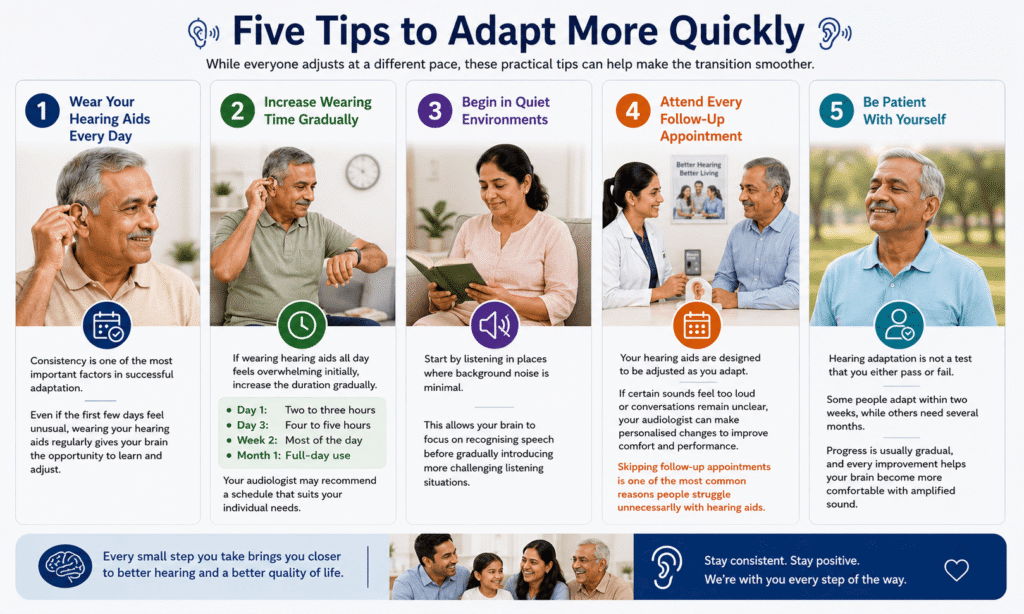
While everyone adjusts at a different pace, these practical tips can help make the transition smoother.
1. Wear Your Hearing Aids Every Day
Consistency is one of the most important factors in successful adaptation.
Even if the first few days feel unusual, wearing your hearing aids regularly gives your brain the opportunity to learn and adjust.
2. Increase Wearing Time Gradually
If wearing hearing aids all day feels overwhelming initially, increase the duration gradually.
For example:
- Day 1: Two to three hours.
- Day 3: Four to five hours.
- Week 2: Most of the day.
- Month 1: Full-day use.
Your audiologist may recommend a schedule that suits your individual needs.
3. Begin in Quiet Environments
Start by listening in places where background noise is minimal.
This allows your brain to focus on recognising speech before gradually introducing more challenging listening situations.
4. Attend Every Follow-Up Appointment
Your hearing aids are designed to be adjusted as you adapt.
If certain sounds feel too loud or conversations remain unclear, your audiologist can make personalised changes to improve comfort and performance.
Skipping follow-up appointments is one of the most common reasons people struggle unnecessarily with hearing aids.
5. Be Patient With Yourself
Hearing adaptation is not a test that you either pass or fail.
Some people adapt within two weeks, while others need several months.
Progress is usually gradual, and every improvement helps your brain become more comfortable with amplified sound.
Real-Life Patient Scenarios
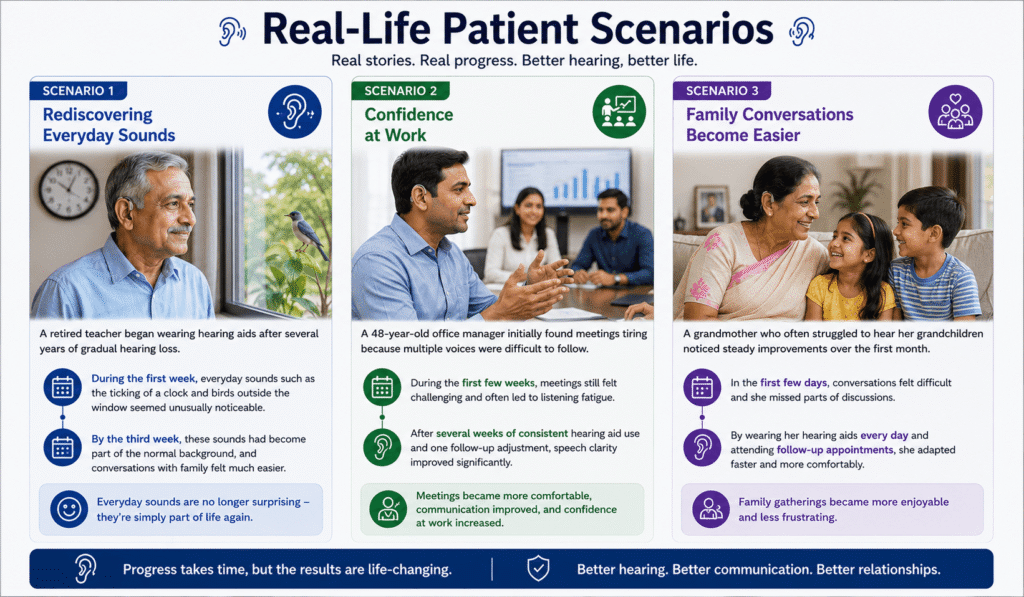
Scenario 1 – Rediscovering Everyday Sounds
A retired teacher began wearing hearing aids after several years of gradual hearing loss.
During the first week, everyday sounds such as the ticking of a clock and birds outside the window seemed unusually noticeable. By the third week, these sounds had become part of the normal background, and conversations with family felt much easier.
Scenario 2 – Confidence at Work
A 48-year-old office manager initially found meetings tiring because multiple voices were difficult to follow.
After several weeks of consistent hearing aid use and one follow-up adjustment, speech clarity improved significantly, making meetings more comfortable and less exhausting.
Scenario 3 – Family Conversations Become Easier
A grandmother who often struggled to hear her grandchildren noticed steady improvements over the first month.
By wearing her hearing aids every day and attending follow-up appointments, family gatherings became more enjoyable and less frustrating.
Mistakes That Can Slow Down Adaptation
Avoiding these common mistakes can make your adjustment period much smoother.
- Wearing hearing aids only occasionally.
- Avoiding follow-up appointments.
- Expecting perfect hearing on the first day.
- Comparing your progress with someone else’s.
- Attempting to adjust settings yourself without professional guidance.
Successful adaptation depends on patience, consistency, and regular support from your hearing care professional.
Expert Advice from Hearing Point
If you’re feeling unsure during your first few weeks with hearing aids, remember that you’re not alone.
Every successful hearing aid user has experienced an adjustment period.
The most important things you can do are:
- Wear your hearing aids consistently.
- Follow your audiologist’s advice.
- Attend follow-up appointments.
- Share any concerns during reviews.
- Give your brain the time it needs to adapt.
With the right support, hearing aids often become a natural part of everyday life, helping you communicate more confidently and enjoy the sounds you’ve been missing.
Myth vs Fact
Many first-time hearing aid users feel anxious because of common misconceptions. Understanding the facts can help set realistic expectations and make the adjustment process much smoother.
| Myth | Fact |
| I’ll hear perfectly on the first day. | Hearing aids improve access to sound, but your brain needs time to adapt. Most people adjust gradually over several weeks. |
| If sounds seem too loud, something is wrong with my hearing aids. | Newly amplified everyday sounds often seem louder at first because your brain is relearning how to process them. |
| If I’m struggling after a week, hearing aids aren’t for me. | The adjustment period varies from person to person. Many users continue to notice improvements over several weeks or months. |
| I should only wear my hearing aids when I really need them. | Consistent daily use helps your brain adapt more quickly and improves long-term results. |
| Follow-up appointments aren’t necessary once I’ve received my hearing aids. | Follow-up visits allow your audiologist to fine-tune your hearing aids and address any concerns, improving comfort and performance. |
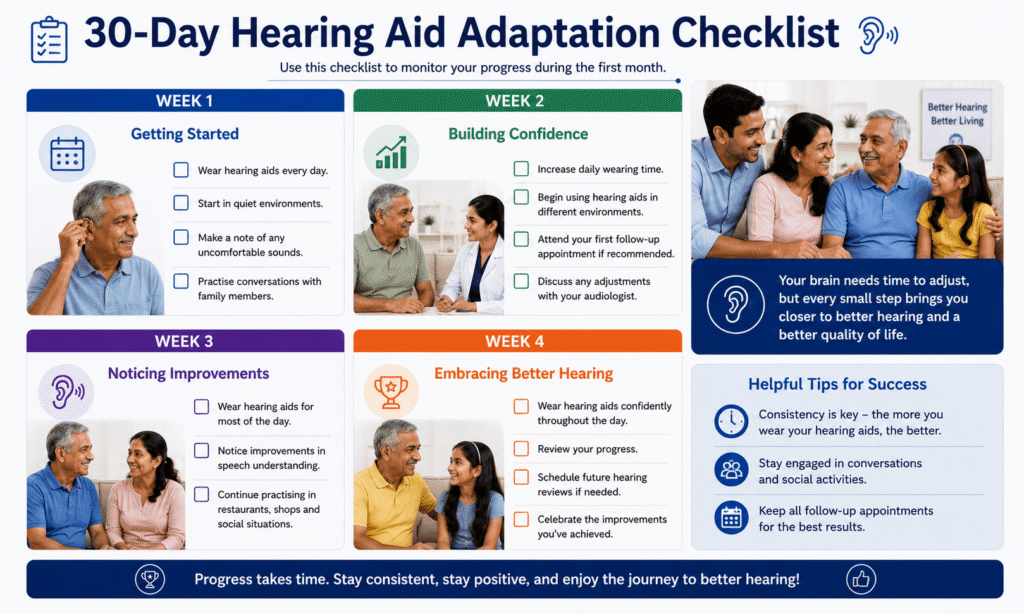
30-Day Hearing Aid Adaptation Checklist
Use this checklist to monitor your progress during the first month.
Week 1
- Wear hearing aids every day.
- Start in quiet environments.
- Make a note of any uncomfortable sounds.
- Practise conversations with family members.
Week 2
- Increase daily wearing time.
- Begin using hearing aids in different environments.
- Attend your first follow-up appointment if recommended.
- Discuss any adjustments with your audiologist.
Week 3
- Wear hearing aids for most of the day.
- Notice improvements in speech understanding.
- Continue practising in restaurants, shops and social situations.
Week 4
- Wear hearing aids confidently throughout the day.
- Review your progress.
- Schedule future hearing reviews if needed.
- Celebrate the improvements you’ve achieved.
Frequently Asked Questions
How long does it usually take to get used to hearing aids?
Most people begin adapting within two to six weeks. Complete adjustment may take up to three months, depending on your hearing loss, lifestyle, and how consistently you wear your hearing aids.
Is it normal for my own voice to sound different?
Yes. Many first-time users notice changes in how their own voice sounds. This usually improves as your brain adapts, and your audiologist can make adjustments if necessary.
Should I wear my hearing aids all day?
Most hearing care professionals recommend wearing your hearing aids consistently each day. If full-day use feels overwhelming initially, gradually increase wearing time as advised by your audiologist.
What should I do if some sounds feel too loud?
Don’t stop wearing your hearing aids. Instead, make a note of the sounds that feel uncomfortable and discuss them during your follow-up appointment. Small programming adjustments often resolve these concerns.
Can my hearing aids be adjusted after I start wearing them?
Yes. Modern digital hearing aids can usually be fine-tuned to improve comfort, speech clarity, and performance as you adapt to them.
When should I contact my hearing care professional?
You should contact your hearing care professional if your hearing aids cause discomfort, stop working correctly, or if you continue to experience difficulties despite wearing them consistently.
Conclusion
Adjusting to hearing aids is a journey that requires patience, consistency, and the right professional support.
While the first few days may feel unfamiliar, most users gradually notice improvements in speech understanding, communication, and overall confidence. Every small improvement is a sign that your brain is adapting to hearing sounds more clearly again.
Remember that hearing aids are not simply devices—they are part of a personalised hearing care programme. Regular use, professional fitting, and follow-up appointments all contribute to long-term success.
If you’re beginning your hearing journey, focus on steady progress rather than immediate perfection. With time and expert guidance, hearing aids can become a natural part of everyday life, helping you reconnect with conversations, family, and the sounds around you.
Continue Your Hearing Care Journey
If you found this guide helpful, these resources may also help you make informed decisions about your hearing care:
- 10 Questions to Ask Before Buying a Hearing Aid – Learn what to ask before investing in hearing aids.
- Why Professional Hearing Aid Fitting Is More Important Than Price – Understand why expert fitting has a significant impact on hearing outcomes.
- Hearing Aid Buying Guide: Online vs Clinic – What’s Better? – Compare different ways of purchasing hearing aids.
- Latest Hearing Aid Technology in 2026 – Explore the latest innovations in modern hearing aids.
About the Hearing Point Editorial Team
The Hearing Point Editorial Team develops educational resources to help individuals and families better understand hearing health, hearing aids, speech therapy, balance disorders, and hearing rehabilitation.
Our articles are created using patient-focused research, current hearing care knowledge, and editorial best practices. Every article is reviewed for accuracy, readability, and relevance before publication and is updated periodically to reflect developments in hearing care and hearing aid technology.
Author: Hearing Point Editorial Team
Category: Knowledge Library
Last Updated: July 2026
Educational Disclaimer
This article is intended for educational purposes only and should not replace professional hearing assessment, diagnosis, or personalised medical advice.