
Quick Answer
Digital hearing aids are worth it for most people with hearing loss because they provide clearer sound, better speech understanding, noise reduction, and personalized hearing adjustments. Compared to traditional hearing aids, digital models offer superior performance and a more natural listening experience.
Introduction
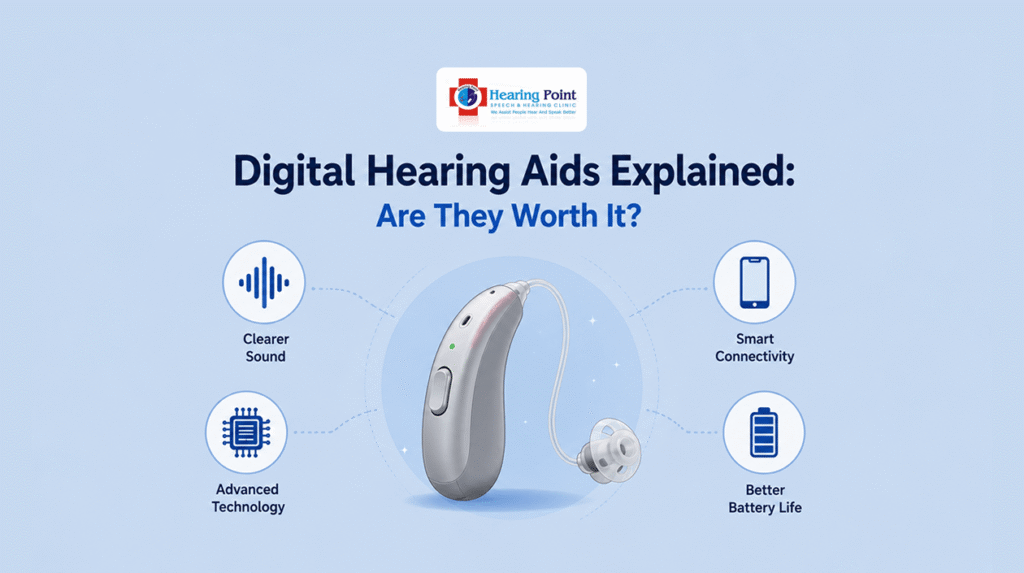
Hearing aid technology has advanced significantly over the past decade. Modern digital hearing aids do much more than simply amplify sound.
Today’s devices can automatically adapt to different environments, reduce background noise, and improve speech clarity, making conversations easier and more comfortable.
If you’re considering a hearing aid, understanding how digital hearing aids work can help you decide whether they are the right choice for your needs.
What Is a Digital Hearing Aid?
A digital hearing aid is an electronic device that converts sound into digital signals before processing and amplifying them.
Unlike older analog hearing aids that simply make all sounds louder, digital hearing aids analyze incoming sounds and adjust them intelligently.
This allows users to hear speech more clearly while reducing unwanted background noise.
How Do Digital Hearing Aids Work?
Digital hearing aids follow a simple process:
Step 1: Sound Collection
The microphone captures sounds from the environment.
Step 2: Digital Processing
The hearing aid converts sound into digital signals and analyzes it.
Step 3: Sound Enhancement
The device amplifies speech while reducing unwanted noise.
Step 4: Sound Delivery
The processed sound is delivered into the ear.
This process happens almost instantly and continuously throughout the day.
Key Benefits of Digital Hearing Aids
Better Speech Clarity
Digital hearing aids are designed to improve speech understanding, especially during conversations.
This makes it easier to communicate in daily life.
Noise Reduction Technology
Modern devices can identify background noise and reduce it automatically.
Examples include:
- Traffic noise
- Restaurant noise
- Crowd noise
- Fan or air conditioner sounds
Personalized Sound Settings
Digital hearing aids can be programmed based on:
- Hearing test results
- Personal preferences
- Listening environments
This creates a more customized hearing experience.
Automatic Environmental Adjustment
Many digital hearing aids automatically adjust when you move between different environments.
For example:
- Quiet room
- Busy office
- Outdoor setting
- Social gathering
Improved Comfort
The sound produced by digital hearing aids generally feels more natural and comfortable than older technologies.
Digital vs Traditional Hearing Aids
| Feature | Digital Hearing Aids | Traditional Hearing Aids |
| Sound Quality | High | Basic |
| Noise Reduction | Advanced | Limited |
| Speech Clarity | Excellent | Moderate |
| Customization | Extensive | Limited |
| Automatic Adjustments | Yes | No |
| Connectivity | Often Available | Rare |
Who Should Consider Digital Hearing Aids?
Digital hearing aids are suitable for:
- First-time hearing aid users
- Seniors
- Working professionals
- Individuals with active lifestyles
- People who struggle in noisy environments
Most users benefit from the flexibility and sound quality they provide.
Are Digital Hearing Aids Better for Seniors?
In many cases, yes.
Benefits for seniors include:
- Easier conversations
- Better television listening
- Improved family communication
- Reduced listening effort
Many modern models also include rechargeable batteries, making them easier to manage.
Common Myths About Digital Hearing Aids
Myth 1: They Restore Perfect Hearing
Digital hearing aids improve hearing significantly but do not restore natural hearing completely.
Myth 2: They Are Difficult to Use
Most modern devices are designed to be user-friendly and easy to operate.
Myth 3: They Only Help Older Adults
Hearing loss can affect people of all ages, and digital hearing aids can benefit many users.
Things to Consider Before Buying
Before purchasing a digital hearing aid:
✔ Get a professional hearing test
✔ Understand your hearing needs
✔ Compare different hearing aid styles
✔ Ask about trial options
✔ Consider long-term support and maintenance
Signs You May Benefit from a Digital Hearing Aid
You may benefit if you:
- Frequently ask people to repeat themselves
- Struggle in noisy environments
- Increase television volume regularly
- Experience difficulty understanding speech
- Feel tired after conversations
These are common indicators of hearing loss.
Conclusion
Digital hearing aids have transformed the way people manage hearing loss. With advanced sound processing, noise reduction, and personalized settings, they provide a better hearing experience than traditional technologies.
For most individuals with hearing loss, digital hearing aids are worth considering because they improve communication, comfort, and overall quality of life.
FAQs
What is a digital hearing aid?
A digital hearing aid converts sound into digital signals and processes it to improve hearing quality.
Are digital hearing aids better than traditional hearing aids?
Yes. They generally provide better sound quality, speech clarity, and noise reduction.
Can digital hearing aids reduce background noise?
Yes. Most modern digital hearing aids include noise reduction technology.
Are digital hearing aids suitable for seniors?
Yes. Many seniors benefit from improved speech understanding and easier communication.
Do I need a hearing test before buying a digital hearing aid?
Yes. A professional hearing test helps determine the most suitable hearing aid for your needs.