
Quick Answer
The best hearing aid for elderly parents depends on their hearing loss, lifestyle, comfort, and ease of use. Most seniors benefit from Behind-the-Ear (BTE) or Receiver-in-Canal (RIC) hearing aids because they offer clear sound, simple controls, and reliable performance.
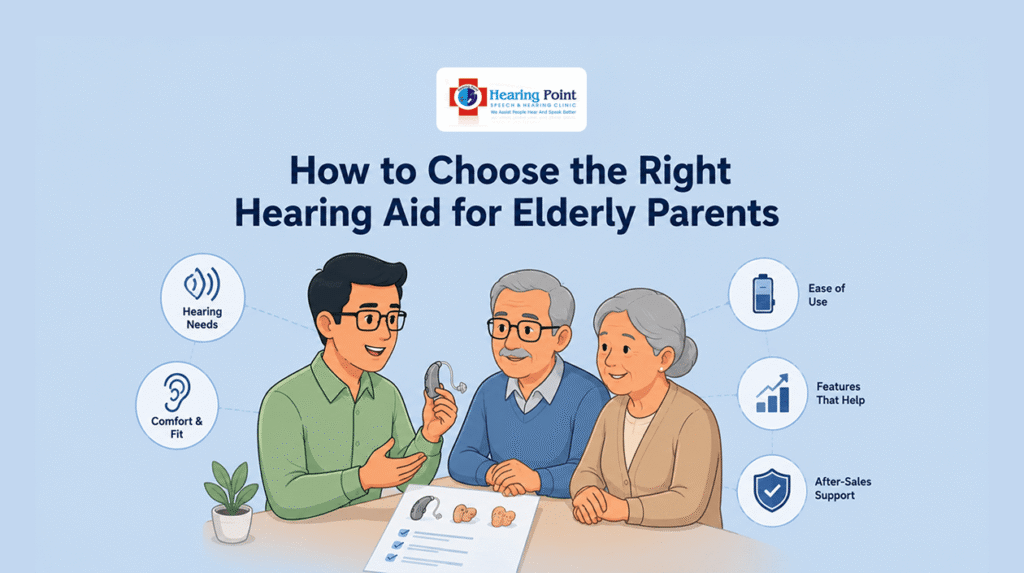
Introduction
Watching a parent struggle to hear conversations, television programs, or family discussions can be difficult. Hearing loss is common among older adults, but choosing the right hearing aid can significantly improve communication, confidence, and quality of life.
With many styles and technologies available, finding the best hearing aid for an elderly parent may feel overwhelming. This guide explains what to consider before making a decision.
Why Hearing Aids Are Important for Seniors
Untreated hearing loss can affect more than hearing alone.
It may contribute to:
- Communication difficulties
- Social isolation
- Reduced confidence
- Family frustration
- Lower quality of life
The right hearing aid can help seniors stay connected and engaged in everyday activities.
Signs Your Parent May Need a Hearing Aid
You may notice:
- Frequently asking people to repeat themselves
- Difficulty following conversations
- Increasing television volume
- Avoiding social gatherings
- Complaints that others are mumbling
If these signs occur regularly, a professional hearing test is recommended.
Step 1: Schedule a Professional Hearing Test
Before choosing any hearing aid, a complete hearing assessment is essential.
A hearing test helps determine:
- Type of hearing loss
- Severity of hearing loss
- Most suitable hearing aid options
The results ensure your parent receives the correct solution for their needs.
Step 2: Consider Ease of Use
Many seniors prefer devices that are simple to operate.
Look for hearing aids with:
- Easy volume controls
- Simple charging systems
- Comfortable fit
- Clear user interface
Complicated devices often lead to frustration and reduced usage.
Step 3: Choose the Right Hearing Aid Type
Behind-the-Ear (BTE)
Best For:
- Moderate to severe hearing loss
- Seniors who prefer larger controls
Benefits:
- Easy to handle
- Powerful sound amplification
- Long battery life
Receiver-in-Canal (RIC)
Best For:
- Mild to severe hearing loss
- Seniors seeking comfort and sound quality
Benefits:
- Lightweight design
- Natural sound experience
- Comfortable daily use
In-the-Ear (ITE)
Best For:
- Seniors who want an all-in-one device
Benefits:
- Custom fit
- Easy insertion and removal
Invisible Hearing Aids
Best For:
- Mild to moderate hearing loss
Benefits:
- Nearly invisible appearance
Consideration:
May be difficult for some seniors to handle due to their small size.
Comparison of Hearing Aid Types for Seniors
| Type | Ease of Use | Visibility | Power | Recommended for Seniors |
| BTE | Excellent | Visible | High | Yes |
| RIC | Very Good | Low | High | Yes |
| ITE | Good | Moderate | Medium | Yes |
| Invisible | Moderate | Very Low | Moderate | Depends on dexterity |
Step 4: Look for Senior-Friendly Features
Modern hearing aids offer features that can make daily life easier.
Useful features include:
Rechargeable Batteries
Eliminates the need to change small batteries regularly.
Noise Reduction
Improves speech understanding in noisy environments.
Feedback Control
Reduces annoying whistling sounds.
Automatic Sound Adjustment
Automatically adapts to different listening situations.
Step 5: Consider Lifestyle Needs
Ask yourself:
- Does your parent attend social gatherings frequently?
- Do they watch television often?
- Do they use smartphones?
- Are they physically active?
Lifestyle plays an important role in selecting the right hearing aid.
Common Mistakes Families Make
Avoid these mistakes:
❌ Choosing based only on price
❌ Buying without a hearing test
❌ Selecting a device that is difficult to use
❌ Ignoring after-sales support
❌ Buying solely based on appearance
Why Professional Fitting Matters
Even the best hearing aid may perform poorly if it is not fitted correctly.
Professional fitting ensures:
- Comfort
- Better sound quality
- Proper programming
- Improved long-term satisfaction
Questions to Ask Before Buying
- Is the hearing aid easy to use?
- Does it match the hearing loss level?
- Is after-sales support available?
- Are follow-up adjustments included?
- Is there a trial period?
These questions help ensure the right choice.
Quick Buying Checklist
✔ Hearing test completed
✔ Right hearing aid type selected
✔ Easy controls and operation
✔ Comfortable fit
✔ Professional fitting included
✔ After-sales support available
Conclusion
Choosing the right hearing aid for an elderly parent involves more than selecting a device. The best solution combines professional testing, appropriate technology, comfort, and ongoing support.
By understanding your parent’s hearing needs and lifestyle, you can help them find a hearing aid that improves communication, independence, and overall quality of life.
FAQs
What is the best hearing aid for elderly parents?
BTE and RIC hearing aids are often recommended because they are powerful, comfortable, and easy to use.
Are rechargeable hearing aids better for seniors?
Yes. Rechargeable models eliminate the need for frequent battery replacement and are easier to manage.
Should seniors get a hearing test before buying a hearing aid?
Yes. A hearing test is essential for selecting the correct device.
Are invisible hearing aids suitable for older adults?
They can be, but some seniors may find them difficult to handle due to their small size.
How long does it take to adjust to a hearing aid?
Most users adapt within a few weeks, although adjustment time varies.