
Quick Answer
Early signs of hearing loss include frequently asking people to repeat themselves, increasing TV volume, difficulty hearing in noisy environments, ringing in the ears, and trouble following conversations. Recognizing these symptoms early can help prevent further hearing difficulties and improve treatment outcomes.
Introduction
Hearing loss often develops gradually, making it difficult to notice in the early stages. Many people assume others are mumbling or speaking too softly when, in reality, their hearing may be changing.
The good news is that early detection can make a significant difference. Understanding the warning signs allows you to seek professional help before hearing problems begin affecting your daily life.
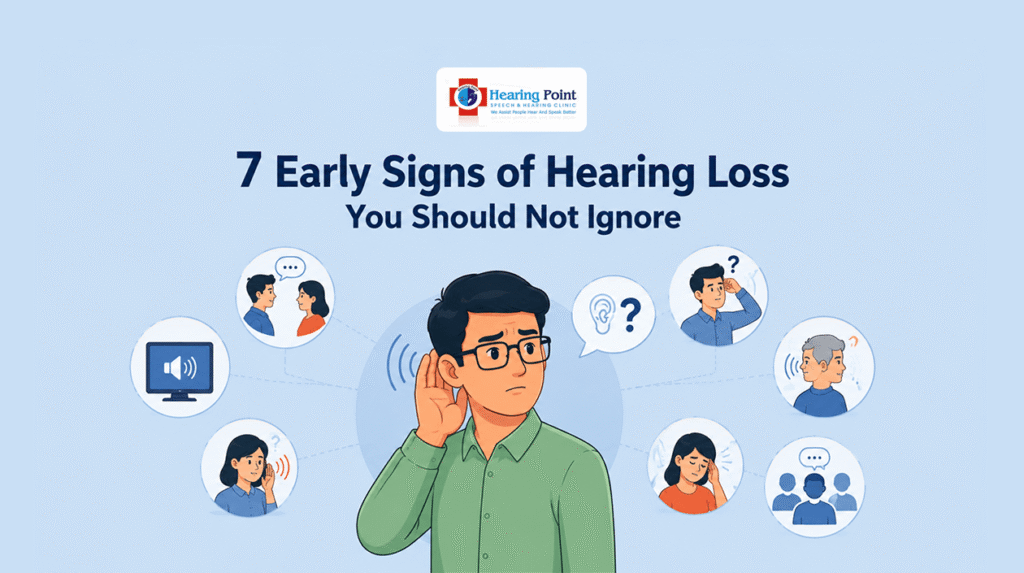
Here are seven early signs of hearing loss you should never ignore.
1. Frequently Asking People to Repeat Themselves
One of the earliest and most common signs of hearing loss is regularly asking people to repeat what they said.
You may find yourself saying:
- “Can you say that again?”
- “I didn’t catch that.”
- “Could you repeat that?”
If this happens often, especially during normal conversations, it may indicate a hearing problem.
2. Difficulty Hearing Conversations in Noisy Places
Many people first notice hearing loss in restaurants, social gatherings, or crowded environments.
You may struggle to:
- Follow conversations in groups
- Understand speech with background noise
- Focus on one speaker among many voices
This difficulty often appears before hearing problems become noticeable in quiet environments.
3. Increasing the Volume on TV or Mobile Devices
Do family members complain that your television is too loud?
If you consistently increase the volume on:
- Television
- Smartphones
- Tablets
- Radio
it could be a sign that your hearing sensitivity is decreasing.
4. Ringing or Buzzing in the Ears (Tinnitus)
Tinnitus is the perception of sound when no external sound is present.
Common descriptions include:
- Ringing
- Buzzing
- Hissing
- Whistling
Tinnitus often occurs alongside hearing loss and should be evaluated by a hearing specialist.
5. Trouble Understanding Certain Voices
People with early hearing loss often hear sounds but struggle to understand words clearly.
This is especially common with:
- Children’s voices
- Women’s voices
- Fast-paced conversations
You may hear someone speaking but miss parts of what they are saying.
6. Feeling Tired After Conversations
Listening should not feel exhausting.
When hearing becomes more difficult, your brain works harder to process sounds and speech.
This can lead to:
- Mental fatigue
- Frustration
- Difficulty concentrating
Many people do not realize hearing loss can contribute to daily exhaustion.
7. Avoiding Social Situations
As hearing difficulties increase, some individuals begin avoiding:
- Family gatherings
- Social events
- Meetings
- Group discussions
This happens because conversations become difficult and stressful.
Over time, untreated hearing loss can affect confidence and quality of life.
Quick Symptom Checklist
Ask yourself:
✔ Do I ask people to repeat themselves frequently?
✔ Do I struggle in noisy environments?
✔ Do I increase the TV volume often?
✔ Do I experience ringing in my ears?
✔ Do conversations feel exhausting?
✔ Do I avoid social gatherings because of hearing difficulties?
If you answered “yes” to several of these questions, it may be time to schedule a hearing evaluation.
When Should You Get a Hearing Test?
Consider a hearing test if:
- Symptoms persist for several weeks
- Family members notice hearing changes
- Hearing difficulties affect daily activities
- You are over the age of 50
Early diagnosis often leads to better treatment outcomes.
Common Causes of Hearing Loss
Hearing loss can result from:
- Aging
- Noise exposure
- Ear infections
- Genetics
- Certain medications
Identifying the cause helps determine the most appropriate treatment.
Why Early Detection Matters
Early diagnosis can:
- Prevent communication difficulties
- Improve quality of life
- Support better hearing aid outcomes
- Reduce social isolation
The sooner hearing loss is identified, the easier it is to manage effectively.
What Happens During a Hearing Test?
A professional hearing evaluation typically includes:
- Discussion of symptoms
- Ear examination
- Hearing assessment
- Review of results
- Personalized recommendations
The process is painless and usually takes less than an hour.
Conclusion
Hearing loss rarely happens overnight. It often begins with small changes that are easy to overlook.
If you notice any of these early signs, don’t wait for symptoms to worsen. A professional hearing evaluation can provide clarity and help you take the right steps toward better hearing.
Early action can make a significant difference in your hearing health and overall well-being.
FAQs
What is the first sign of hearing loss?
Frequently asking people to repeat themselves is often one of the earliest signs.
Can hearing loss develop gradually?
Yes. Most hearing loss develops slowly over time, making it difficult to notice initially.
Is ringing in the ears a sign of hearing loss?
Tinnitus is commonly associated with hearing loss and should be professionally evaluated.
At what age does hearing loss usually begin?
Hearing loss can occur at any age but becomes more common after age 50.
Should I get a hearing test if I have mild symptoms?
Yes. Early testing can help identify hearing issues before they become more serious.