
Quick Answer
RIC (Receiver-in-Canal) and BTE (Behind-the-Ear) hearing aids are both effective solutions for hearing loss. RIC hearing aids are generally preferred for their discreet design and natural sound quality, while BTE hearing aids offer greater power and durability for more severe hearing loss.
The best choice depends on your hearing needs, lifestyle, and personal preferences.
Introduction
When choosing a hearing aid, many people compare RIC and BTE models because they are among the most popular styles available today.
Both offer excellent performance, advanced technology, and comfortable daily use. However, they are designed for different users and hearing needs.
Understanding the differences can help you make a more informed decision.
What Is a RIC Hearing Aid?
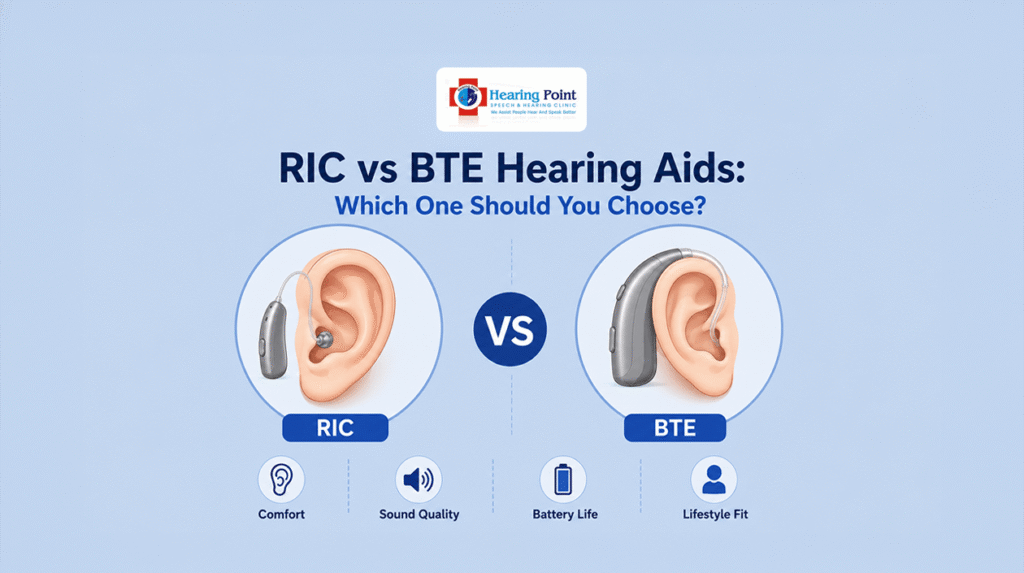
A Receiver-in-Canal (RIC) hearing aid places the speaker (receiver) inside the ear canal while the main device sits behind the ear.
This design creates a more natural listening experience and a smaller overall appearance.
Key Features of RIC Hearing Aids
- Slim and discreet design
- Natural sound quality
- Comfortable for long-term wear
- Available with advanced technology features
What Is a BTE Hearing Aid?
A Behind-the-Ear (BTE) hearing aid sits behind the ear and delivers sound through tubing connected to an earmold or dome.
BTE hearing aids are known for their reliability, durability, and powerful amplification.
Key Features of BTE Hearing Aids
- Strong amplification power
- Easy handling
- Durable construction
- Suitable for a wide range of hearing loss levels
RIC vs BTE: Side-by-Side Comparison
| Feature | RIC Hearing Aid | BTE Hearing Aid |
| Appearance | More discreet | More visible |
| Comfort | Excellent | Very good |
| Sound Quality | Natural and clear | Powerful and clear |
| Power | Moderate to high | High to very high |
| Hearing Loss Range | Mild to severe | Mild to profound |
| Ease of Handling | Moderate | Easy |
| Durability | Good | Excellent |
| Maintenance | Moderate | Easy |
Sound Quality: Which Is Better?
RIC Hearing Aids
RIC devices are often praised for:
- Natural sound quality
- Better perception of environmental sounds
- Comfortable listening experience
Many users report that RIC hearing aids feel more natural because the receiver sits closer to the eardrum.
BTE Hearing Aids
BTE devices provide:
- Strong amplification
- Excellent speech clarity
- Reliable performance in various environments
For individuals with severe hearing loss, BTE hearing aids often provide better results.
Comfort and Appearance
Choose RIC If You Prefer:
✔ Smaller design
✔ Less visible hearing aid
✔ Lightweight daily wear
Choose BTE If You Prefer:
✔ Larger controls
✔ Easier handling
✔ Greater durability
Many older adults find BTE hearing aids easier to insert, remove, and maintain.
Which Hearing Aid Is Better for Seniors?
For many seniors, BTE hearing aids offer advantages such as:
- Easier handling
- Larger batteries
- Simple maintenance
However, seniors with mild or moderate hearing loss may also benefit from RIC models if comfort and appearance are important.
Which Hearing Aid Is Better for Active Lifestyles?
People who:
- Attend meetings regularly
- Participate in social events
- Work in professional environments
often prefer RIC hearing aids because of their discreet appearance and excellent sound quality.
Hearing Loss Level Guide
Mild Hearing Loss
Recommended:
- RIC
- BTE
Moderate Hearing Loss
Recommended:
- RIC
- BTE
Severe Hearing Loss
Recommended:
- BTE
Profound Hearing Loss
Recommended:
- BTE
Common Mistakes When Choosing Between RIC and BTE
Avoid these mistakes:
❌ Choosing based only on appearance
❌ Ignoring hearing loss severity
❌ Skipping professional consultation
❌ Selecting a device without a hearing test
The best hearing aid is the one that matches your hearing needs.
Questions to Ask Before Choosing
- What level of hearing loss do I have?
- Do I prioritize appearance or power?
- How important is ease of handling?
- Will I wear the hearing aid all day?
- What environments do I spend the most time in?
These questions can help narrow down your options.
Quick Decision Guide
Choose RIC Hearing Aids If:
✔ You want a discreet design
✔ You have mild to severe hearing loss
✔ You prefer natural sound quality
✔ You are active socially or professionally
Choose BTE Hearing Aids If:
✔ You need powerful amplification
✔ You have severe hearing loss
✔ You want easy handling
✔ Durability is important
Conclusion
Both RIC and BTE hearing aids are excellent options, but they serve different needs.
RIC hearing aids are often preferred for their comfort, appearance, and natural sound quality, while BTE hearing aids provide greater power and durability.
The best choice depends on your hearing loss, lifestyle, and personal preferences. A professional hearing evaluation can help determine which option is right for you.
FAQs
What is the difference between RIC and BTE hearing aids?
RIC hearing aids place the receiver in the ear canal, while BTE hearing aids deliver sound through tubing connected to an earmold or dome.
Which hearing aid is more comfortable?
Many users find RIC hearing aids more comfortable because of their lightweight and discreet design.
Are BTE hearing aids more powerful?
Yes. BTE hearing aids generally provide stronger amplification and are suitable for severe hearing loss.
Which hearing aid is better for seniors?
BTE hearing aids are often recommended because they are easier to handle and maintain.
Do I need a hearing test before choosing?
Yes. A hearing test helps determine the most appropriate hearing aid type for your hearing needs.