
Quick Answer
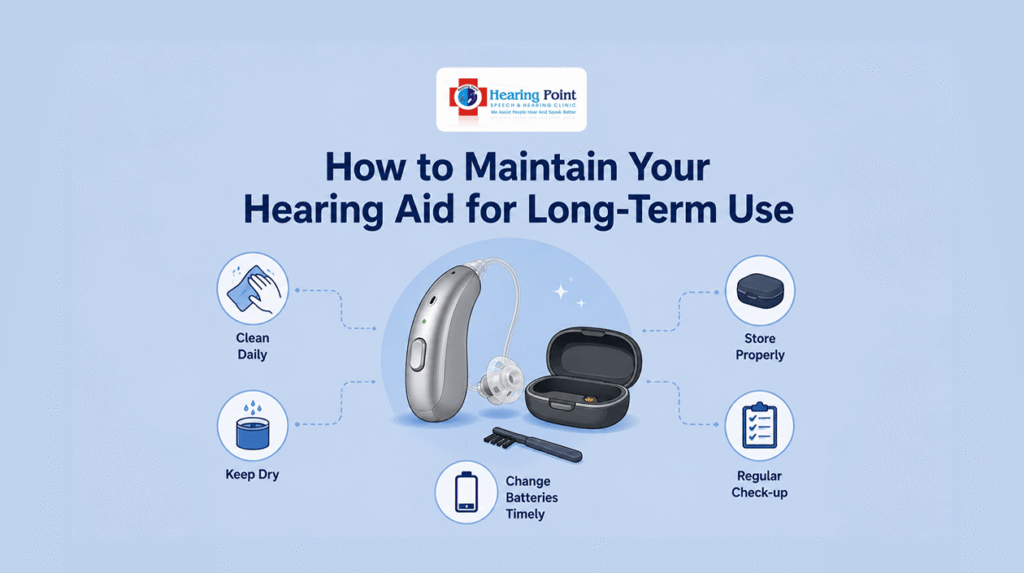
To maintain your hearing aid for long-term use, clean it daily, keep it dry, remove earwax buildup, store it properly, and schedule regular professional checkups. Proper maintenance can improve sound quality, reduce repairs, and extend the life of your hearing aid.
Introduction
A hearing aid is an important investment in your hearing health. Like any electronic device, it requires regular care to perform at its best.
Without proper maintenance, hearing aids can experience reduced sound quality, battery issues, moisture damage, and costly repairs.
The good news is that a few simple maintenance habits can help keep your hearing aid working effectively for years.
Why Hearing Aid Maintenance Is Important
Regular maintenance helps:
- Improve sound quality
- Prevent common problems
- Reduce repair costs
- Increase device lifespan
- Ensure consistent performance
A well-maintained hearing aid can continue to deliver reliable hearing support for many years.
Daily Hearing Aid Care Routine
1. Clean Your Hearing Aid Every Day
Daily cleaning removes:
- Earwax
- Dust
- Skin oils
- Debris
Use a soft, dry cloth or the cleaning tools recommended by your hearing specialist.
Avoid:
❌ Alcohol-based cleaners
❌ Excessive moisture
❌ Household cleaning products
2. Inspect for Earwax Buildup
Earwax is one of the most common causes of hearing aid problems.
Check regularly:
- Sound outlets
- Wax guards
- Receivers
- Ear domes
Removing wax buildup helps maintain clear sound quality.
3. Wipe the Device Before Storage
At the end of the day:
✔ Remove the hearing aid
✔ Wipe away moisture and debris
✔ Inspect for visible dirt
This simple habit can prevent many common issues.
Protect Your Hearing Aid from Moisture
Moisture is one of the biggest threats to hearing aids.
Common Sources of Moisture
- Sweat
- Humidity
- Rain
- Bathroom steam
Protection Tips
✔ Remove hearing aids before showering
✔ Avoid wearing them while swimming
✔ Store them in a dry location
✔ Use a hearing aid drying kit if recommended
Store Your Hearing Aid Properly
Correct storage helps protect the device when not in use.
Best Practices
- Store in a protective case
- Keep away from direct sunlight
- Avoid extreme temperatures
- Keep out of reach of pets and children
Proper storage reduces accidental damage.
Battery Care Tips
For Disposable Batteries
- Replace batteries as needed
- Keep spare batteries available
- Store batteries in a cool, dry place
For Rechargeable Hearing Aids
- Charge according to manufacturer instructions
- Avoid overexposure to heat
- Use approved charging equipment
Good battery care helps ensure reliable performance.
Weekly Maintenance Checklist
Once a week, take a few extra minutes to:
✔ Inspect microphone openings
✔ Check tubing and ear domes
✔ Examine wax guards
✔ Test sound quality
✔ Clean hard-to-reach areas
Weekly inspections help identify issues early.
Signs Your Hearing Aid Needs Professional Attention
Contact a hearing specialist if you notice:
- Distorted sound
- Intermittent performance
- Persistent feedback (whistling)
- Physical damage
- Significant reduction in volume
Professional servicing can prevent minor issues from becoming major problems.
How Often Should Hearing Aids Be Professionally Serviced?
Most hearing specialists recommend:
- Routine checkups every 6 to 12 months
- Immediate inspection if performance changes suddenly
Regular professional maintenance helps keep your device functioning properly.
Common Maintenance Mistakes to Avoid
❌ Using Water to Clean the Device
Hearing aids contain sensitive electronic components and should not be rinsed with water.
❌ Ignoring Earwax Buildup
Small wax blockages can significantly affect performance.
❌ Storing in Humid Areas
Bathrooms and damp locations can damage hearing aid components.
❌ Delaying Repairs
Addressing small issues early can prevent costly repairs later.
Quick Hearing Aid Maintenance Checklist
Daily
✔ Wipe hearing aid clean
✔ Remove visible earwax
✔ Store properly overnight
Weekly
✔ Check microphones
✔ Inspect tubing and domes
✔ Test sound quality
Every 6–12 Months
✔ Schedule professional maintenance
✔ Review hearing aid settings
✔ Replace worn accessories if needed
Comparison: Good vs Poor Hearing Aid Maintenance
| Maintenance Habit | Well-Maintained Hearing Aid | Poorly Maintained Hearing Aid |
| Sound Quality | Consistent | Reduced |
| Repairs | Less frequent | More frequent |
| Lifespan | Longer | Shorter |
| User Experience | Better | Frustrating |
| Reliability | High | Unpredictable |
Conclusion
Proper hearing aid maintenance is one of the simplest ways to protect your investment and ensure consistent performance.
By cleaning your hearing aid regularly, protecting it from moisture, and scheduling professional checkups, you can improve sound quality, reduce repairs, and extend the life of your device.
A few minutes of care each day can make a significant difference over time.
FAQs
How often should I clean my hearing aid?
Basic cleaning should be performed daily to remove earwax and debris.
Can earwax damage a hearing aid?
Earwax can block sound outlets and reduce performance if not removed regularly.
Is moisture harmful to hearing aids?
Yes. Moisture can damage internal electronic components and affect performance.
How long do hearing aids typically last?
With proper care and maintenance, many hearing aids last several years.
When should I have my hearing aid serviced?
Most users benefit from professional maintenance every 6 to 12 months.