
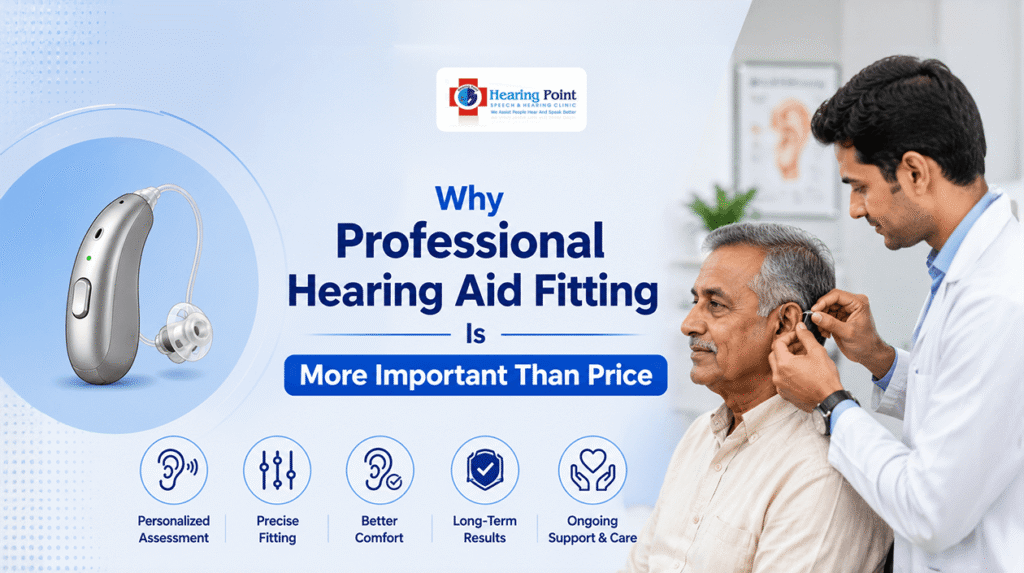
Many people compare hearing aids based on price alone, but the success of a hearing aid depends on much more than the device itself. Professional hearing aid fitting includes a detailed hearing assessment, personalised programming, fine-tuning, and ongoing follow-up care. These services help ensure your hearing aids perform comfortably and effectively in everyday situations, making professional fitting one of the most valuable parts of your hearing care journey.
| Quick Facts | |
| Best for | First-time hearing aid buyers and families comparing hearing care providers |
| Reading Time | 9–11 minutes |
| Key Takeaway | A properly fitted hearing aid usually delivers better long-term results than simply choosing the lowest-priced device. |
| Main Topics | Hearing assessment, fitting, programming, follow-up care, adjustments and long-term hearing success |
Introduction
When comparing hearing aids, one of the first questions people ask is:
“How much does a hearing aid cost?”
While price is an important consideration, it is rarely the most important factor in determining whether a hearing aid will improve your daily life.
A hearing aid is not simply an electronic device that you purchase and start using immediately. It is a personalised medical device that must be carefully selected, programmed, adjusted, and monitored according to your individual hearing needs.
Two people can purchase exactly the same hearing aid model, yet have completely different experiences. One may enjoy clear conversations and greater confidence, while the other may struggle with uncomfortable sounds or poor speech clarity.
The difference often lies not in the hearing aid itself—but in the quality of the professional fitting and ongoing support.
Understanding this difference can help you make a more informed decision and avoid one of the most common mistakes people make when purchasing hearing aids.
Why Many People Focus on Price First
Buying hearing aids is an important investment, so it’s natural to compare prices before making a decision.
Many people search online for:
- Hearing aid price
- Best hearing aid
- Hearing aid machine cost
- Affordable hearing aids
- Hearing aid offers
Although these searches are understandable, they often overlook an important question:
“What services are included with the hearing aid?”
Professional hearing care extends far beyond the device itself.
When comparing providers, you are often comparing an entire hearing rehabilitation programme rather than just the cost of the hearing aid.
This may include:
- Comprehensive hearing assessment
- Hearing aid recommendation
- Professional fitting
- Personalised programming
- Follow-up appointments
- Fine-tuning adjustments
- Cleaning and maintenance guidance
- Ongoing support
These services can have a significant impact on how successfully you adapt to your hearing aids.
A Hearing Aid Is Only One Part of the Solution
Many first-time buyers assume that purchasing a premium hearing aid automatically guarantees excellent hearing.
In reality, hearing improvement depends on several factors working together.
A successful hearing care journey includes:
| Step | Why It Matters |
| Professional hearing assessment | Identifies the type and severity of hearing loss. |
| Choosing the appropriate hearing aid | Matches your hearing needs and lifestyle. |
| Professional fitting | Ensures the device fits comfortably and performs correctly. |
| Personalised programming | Adjusts sound settings to suit your hearing profile. |
| Follow-up appointments | Allows ongoing improvements as your brain adapts to new sounds. |
| Regular maintenance | Helps maintain long-term performance and reliability. |
Skipping any of these steps can reduce the overall benefit you receive from your hearing aids.
What Happens During a Professional Hearing Aid Fitting?
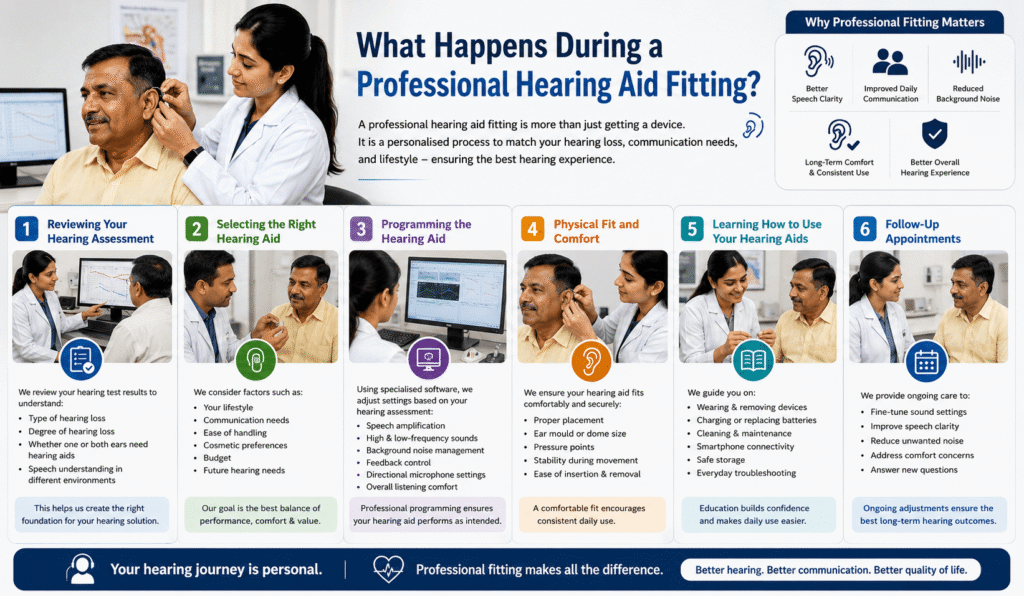
A professional hearing aid fitting is much more than simply receiving a hearing aid. It is a personalised process designed to ensure your device matches your hearing loss, communication needs, and daily lifestyle.
Although the exact process may vary between clinics, a comprehensive hearing aid fitting generally includes the following steps.
1. Reviewing Your Hearing Assessment
Your audiologist begins by reviewing your hearing test results to understand:
- The type of hearing loss.
- The degree of hearing loss.
- Whether one or both ears require hearing aids.
- Your ability to understand speech in different environments.
This information forms the foundation for selecting and programming your hearing aids.
2. Selecting the Right Hearing Aid
Rather than recommending the most expensive model, a qualified hearing care professional considers factors such as:
- Your lifestyle.
- Your communication needs.
- Dexterity and ease of handling.
- Cosmetic preferences.
- Budget.
- Future hearing needs.
The goal is to recommend a hearing aid that provides the best balance between performance, comfort, and long-term value.
3. Programming the Hearing Aid
Modern digital hearing aids are programmable devices.
Using specialised fitting software, your audiologist adjusts settings based on your hearing assessment, including:
- Speech amplification.
- High- and low-frequency sounds.
- Background noise management.
- Feedback control.
- Directional microphone settings.
- Overall listening comfort.
Without professional programming, even a premium hearing aid may not perform as intended.
4. Physical Fit and Comfort
Comfort is just as important as sound quality.
During the fitting, your audiologist checks:
- Proper placement.
- Ear mould or dome size.
- Pressure points.
- Stability during movement.
- Ease of insertion and removal.
A comfortable fit encourages consistent daily use, which is essential for successful hearing rehabilitation.
5. Learning How to Use Your Hearing Aids
Many first-time users feel unsure about operating their new hearing aids.
A professional fitting appointment should include guidance on:
- Wearing and removing hearing aids.
- Charging or replacing batteries.
- Cleaning and maintenance.
- Using smartphone connectivity (if available).
- Safe storage.
- Everyday troubleshooting.
This education helps reduce frustration and builds confidence.
6. Follow-Up Appointments
Your hearing journey doesn’t end when you leave the clinic.
As your brain adapts to hearing new sounds, your hearing aids may require additional adjustments.
Follow-up appointments allow your audiologist to:
- Fine-tune sound settings.
- Improve speech clarity.
- Reduce unwanted background noise.
- Address comfort concerns.
- Answer new questions.
These ongoing adjustments are often one of the biggest differences between simply purchasing a hearing aid and receiving professional hearing care.
Why Programming and Fine-Tuning Matter
Every person’s hearing loss is unique.
Even if two people purchase the same hearing aid model, the settings required for each individual are often very different.
Professional programming helps ensure:
- Conversations sound clearer.
- Background noise is more comfortable.
- Television listening improves.
- Phone conversations become easier.
- Listening fatigue is reduced.
- Overall hearing feels more natural.
Without these personalised adjustments, users may feel disappointed even though the hearing aid itself is functioning correctly.
Comparing Price Alone Can Be Misleading
A lower-priced hearing aid may appear attractive initially, but it’s important to understand what is included in the overall service.
The table below highlights some of the key differences.
| Feature | Price-Focused Purchase | Professionally Fitted Hearing Aid |
| Hearing assessment | May be limited or separate | Comprehensive evaluation |
| Device selection | Based mainly on price | Based on hearing needs and lifestyle |
| Personalised programming | Limited or unavailable | Included |
| Comfort fitting | Basic | Individualised fitting |
| Follow-up appointments | Often limited | Ongoing support |
| Fine-tuning adjustments | May incur additional charges | Usually included as part of care |
| User education | Basic instructions | Detailed guidance and training |
| Long-term hearing success | Variable | Optimised through ongoing care |
The value of a hearing aid is not determined solely by its purchase price. The quality of professional care before, during, and after fitting plays a major role in achieving the best possible hearing outcome.
Real-Life Patient Scenarios
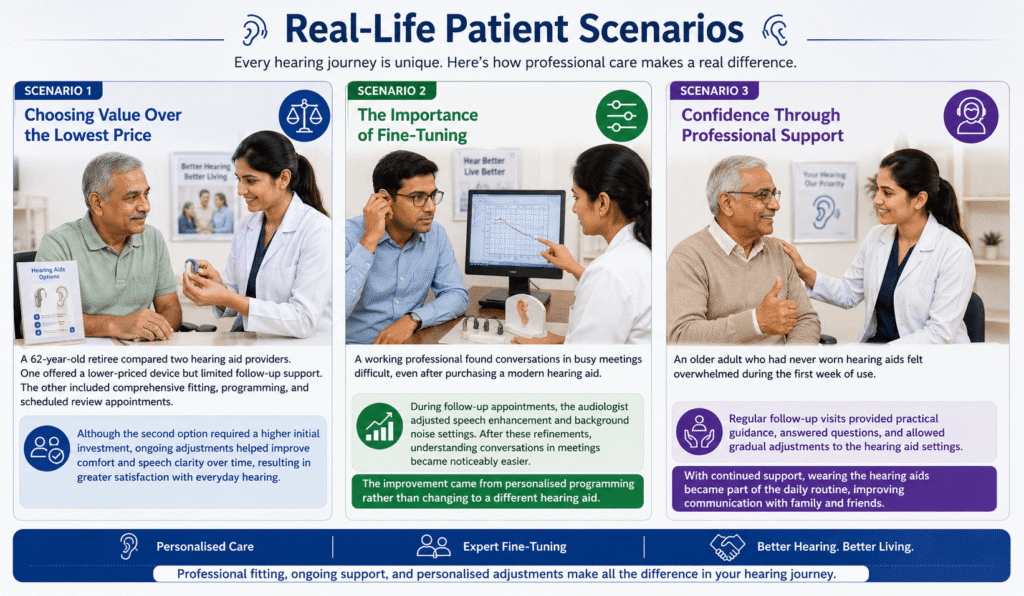
Scenario 1 – Choosing Value Over the Lowest Price
A 62-year-old retiree compared two hearing aid providers. One offered a lower-priced device but limited follow-up support. The other included comprehensive fitting, programming, and scheduled review appointments.
Although the second option required a higher initial investment, ongoing adjustments helped improve comfort and speech clarity over time, resulting in greater satisfaction with everyday hearing.
Scenario 2 – The Importance of Fine-Tuning
A working professional found conversations in busy meetings difficult, even after purchasing a modern hearing aid.
During follow-up appointments, the audiologist adjusted speech enhancement and background noise settings. After these refinements, understanding conversations in meetings became noticeably easier.
The improvement came from personalised programming rather than changing to a different hearing aid.
Scenario 3 – Confidence Through Professional Support
An older adult who had never worn hearing aids felt overwhelmed during the first week of use.
Regular follow-up visits provided practical guidance, answered questions, and allowed gradual adjustments to the hearing aid settings. With continued support, wearing the hearing aids became part of the daily routine, improving communication with family and friends.
Expert Tips from Hearing Point
Before choosing a hearing aid provider, consider asking these questions:
- Is a comprehensive hearing assessment included?
- Who will programme and adjust my hearing aids?
- How many follow-up appointments are provided?
- Can the hearing aids be fine-tuned if my hearing needs change?
- Will I receive guidance on cleaning, maintenance, and daily use?
- What support is available if I experience problems after fitting?
The answers to these questions often reveal more about the quality of hearing care than the price of the hearing aid alone.
Common Myths About Professional Hearing Aid Fitting
Many misconceptions prevent people from receiving the full benefits of hearing aids. Let’s separate fact from fiction.
| Myth | Reality |
| If I buy an expensive hearing aid, it will automatically work perfectly. | Even premium hearing aids require professional fitting, programming, and follow-up adjustments to perform at their best. |
| All hearing aids come pre-programmed. | Modern hearing aids are personalised using specialised software based on your hearing test results. |
| I only need one appointment. | Most users benefit from follow-up visits to fine-tune settings as they adapt to new sounds. |
| Professional fitting only improves comfort. | Professional fitting improves both physical comfort and hearing performance, including speech clarity and background noise management. |
| Buying online always saves money. | Lower upfront prices may not include assessment, fitting, programming, or after-sales support, which are essential for long-term success. |
Choosing the Right Hearing Care Provider Checklist
Before purchasing hearing aids, use this checklist during your consultation.
Hearing Assessment
- Comprehensive hearing evaluation performed
- Hearing loss explained clearly
- Lifestyle discussed
- Suitable hearing aid options explained
Hearing Aid Fitting
- Hearing aids professionally programmed
- Physical fit checked for comfort
- Speech clarity tested
- Background noise settings adjusted
After-Sales Support
- Follow-up appointments included
- Cleaning and maintenance guidance provided
- Troubleshooting support available
- Warranty explained
- Future programming adjustments available
Keeping this checklist with you can help ensure you receive complete hearing care rather than simply purchasing a device.
Why Professional Hearing Care Provides Better Long-Term Value
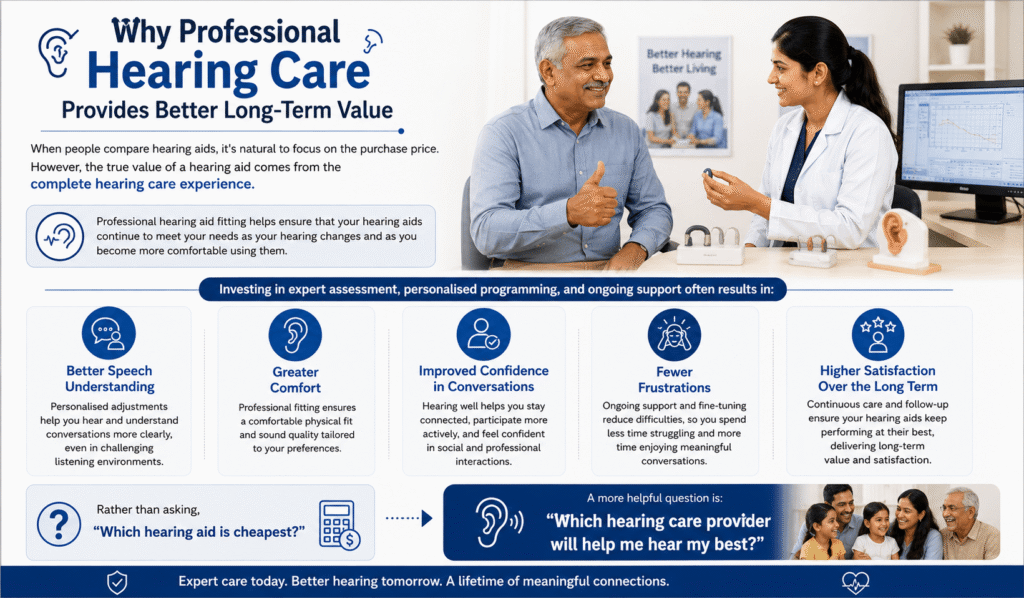
When people compare hearing aids, it’s natural to focus on the purchase price. However, the true value of a hearing aid comes from the complete hearing care experience.
Professional hearing aid fitting helps ensure that your hearing aids continue to meet your needs as your hearing changes and as you become more comfortable using them.
Investing in expert assessment, personalised programming, and ongoing support often results in:
- Better speech understanding.
- Greater comfort.
- Improved confidence in conversations.
- Fewer frustrations.
- Higher satisfaction over the long term.
Rather than asking, “Which hearing aid is cheapest?”, a more helpful question is:
“Which hearing care provider will help me hear my best?”
Frequently Asked Questions
Is professional hearing aid fitting really necessary?
Yes. Professional fitting ensures your hearing aids are programmed according to your hearing test results, fit comfortably, and are adjusted to suit your daily listening environments.
Can the same hearing aid work differently for different people?
Yes. Even identical hearing aid models require personalised programming based on each person’s hearing loss, lifestyle, and communication needs.
How many follow-up appointments are usually needed?
The number of follow-up appointments varies from person to person. Many users benefit from several review appointments during the first few weeks as they adapt to their hearing aids.
Does professional fitting improve speech clarity?
Yes. Fine-tuning hearing aid settings can improve speech understanding while helping reduce unwanted background noise in different listening environments.
What happens if my hearing changes later?
Most modern digital hearing aids can be reprogrammed to accommodate changes in your hearing. Regular hearing reviews help ensure your hearing aids continue to perform effectively.
Should I choose a clinic based only on price?
Price is one factor to consider, but it should not be the only deciding factor. Professional assessment, fitting, programming, follow-up care, and ongoing support are equally important for achieving the best long-term hearing outcomes.
Conclusion
Choosing a hearing aid is about much more than comparing prices.
The success of your hearing aids depends on selecting the right device, receiving professional fitting and programming, and having access to ongoing support whenever adjustments are needed.
A qualified hearing care professional works with you throughout your hearing journey, helping ensure your hearing aids continue to perform comfortably and effectively in different listening environments.
If you’re considering hearing aids, focus on the quality of care you’ll receive—not just the price of the device. Professional hearing aid fitting can make the difference between simply wearing hearing aids and truly enjoying better hearing every day.
About This Guide
This guide explains why professional hearing aid fitting is one of the most important factors in achieving successful hearing outcomes. It covers what happens during a hearing aid fitting, why personalised programming matters, how follow-up care improves long-term performance, and why choosing a provider based only on price may not always deliver the best value.
Whether you’re purchasing your first hearing aid or comparing hearing care providers, this article will help you understand what to expect before making an informed decision.
About the Hearing Point Editorial Team
The Hearing Point Editorial Team creates educational resources to help individuals and families better understand hearing health, hearing aids, speech therapy, balance disorders, and hearing rehabilitation.
Every article is developed using patient-focused research, current hearing care knowledge, and editorial best practices. Our goal is to provide clear, trustworthy information that helps readers make informed decisions about their hearing health.
Educational Disclaimer
This article is intended for educational purposes only and should not replace professional hearing assessment, diagnosis, or personalised medical advice.