
Quick Answer
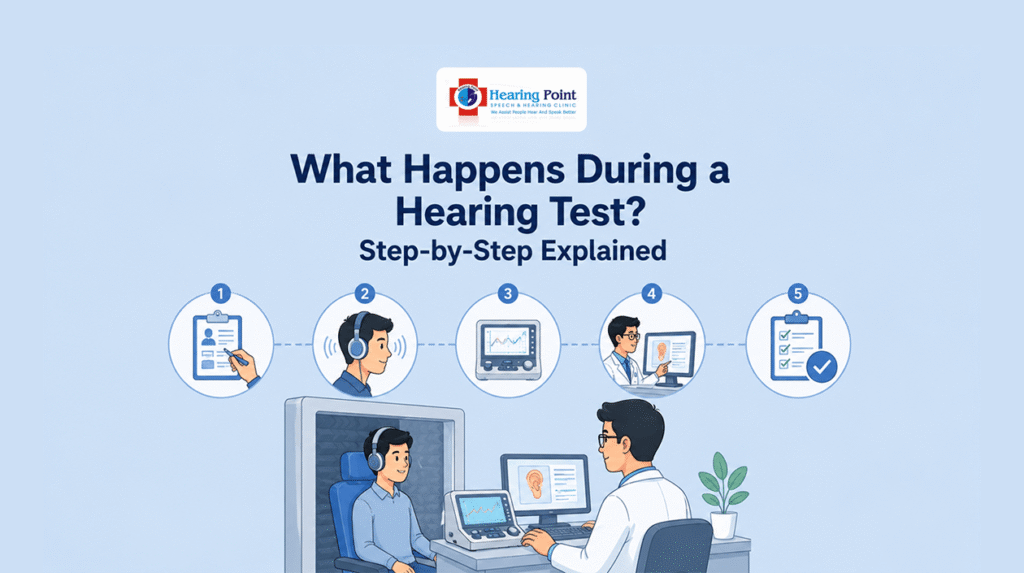
A hearing test is a painless evaluation used to measure your ability to hear different sounds, pitches, and speech. The process typically includes a consultation, ear examination, pure-tone testing, and a discussion of the results. Most hearing tests take between 30 and 60 minutes.
Introduction
Many people delay getting a hearing test because they don’t know what to expect. Some worry the process may be uncomfortable, while others assume hearing loss is simply a normal part of aging.
The truth is that a hearing test is simple, painless, and one of the most important steps toward better hearing health.
This guide explains exactly what happens during a hearing test and how the results can help improve your hearing and quality of life.
Why Is a Hearing Test Important?
A hearing test helps identify:
- Hearing loss severity
- Type of hearing loss
- Speech understanding ability
- Suitable treatment options
Early detection can help prevent communication difficulties and improve long-term outcomes.
Signs You May Need a Hearing Test
You should consider a hearing evaluation if you:
- Frequently ask people to repeat themselves
- Increase TV or phone volume regularly
- Struggle to hear conversations in noisy places
- Experience ringing in the ears (tinnitus)
- Feel people are mumbling when they speak
These symptoms may indicate hearing loss and should not be ignored.
Step 1: Initial Consultation
The appointment usually begins with a discussion about your hearing concerns.
Your hearing specialist may ask:
- When did you first notice hearing difficulties?
- Do you have ringing in your ears?
- Have you been exposed to loud noise?
- Is there a family history of hearing loss?
This information helps guide the evaluation process.
Step 2: Ear Examination
Before testing begins, your ears are examined using a specialized instrument called an otoscope.
The purpose is to check for:
- Earwax buildup
- Ear infections
- Blockages
- Physical abnormalities
Sometimes hearing problems are caused by simple issues that can be treated without hearing aids.
Step 3: Pure-Tone Hearing Test
This is the most common hearing test.
During the test:
- You wear headphones
- Listen to different tones and frequencies
- Indicate when you hear a sound
The test measures the quietest sounds you can hear at different pitches.
Step 4: Speech Recognition Testing
Speech testing evaluates how well you understand spoken words.
You may be asked to:
- Listen to words through headphones
- Repeat the words you hear
This helps determine how hearing loss affects everyday communication.
Step 5: Review of Results
After testing is complete, the specialist reviews your results.
You will learn:
- Whether hearing loss is present
- The severity of hearing loss
- Which frequencies are affected
- Recommended next steps
Results are usually displayed on an audiogram, a chart showing your hearing ability.
Understanding Hearing Loss Levels
| Hearing Level | Description |
| Normal Hearing | Minimal difficulty hearing sounds |
| Mild Hearing Loss | Difficulty hearing soft sounds |
| Moderate Hearing Loss | Trouble hearing conversations |
| Severe Hearing Loss | Significant communication challenges |
| Profound Hearing Loss | Very limited hearing ability |
Understanding your hearing level helps determine the most suitable treatment option.
What Happens If Hearing Loss Is Found?
If hearing loss is detected, recommendations may include:
- Monitoring hearing changes
- Medical treatment (if required)
- Hearing aid consultation
- Follow-up testing
The goal is to improve hearing and communication as early as possible.
Is a Hearing Test Painful?
No.
Hearing tests are:
✔ Safe
✔ Non-invasive
✔ Completely painless
✔ Suitable for adults and children
Most patients find the process simple and comfortable.
How Often Should You Get a Hearing Test?
Experts generally recommend:
- Adults over 50: Every 1–3 years
- Hearing aid users: Annual evaluations
- Individuals exposed to loud noise: Regular monitoring
Routine testing helps detect hearing changes early.
Common Myths About Hearing Tests
Myth 1: Hearing tests are painful.
Fact: Hearing tests are painless and non-invasive.
Myth 2: Only older adults need hearing tests.
Fact: Hearing loss can affect people of all ages.
Myth 3: Hearing loss is always permanent.
Fact: Some hearing issues can be medically treated.
Conclusion
A hearing test is one of the simplest and most important steps you can take for your hearing health. The process is quick, painless, and provides valuable information about your ability to hear and understand speech.
If you are experiencing signs of hearing loss, scheduling a professional hearing evaluation can help you find the right solution sooner rather than later.
FAQs
How long does a hearing test take?
Most hearing tests take between 30 and 60 minutes.
Is a hearing test painful?
No, hearing tests are completely painless.
What should I do before a hearing test?
Bring any previous hearing reports and be prepared to discuss your hearing concerns.
Can a hearing test detect all hearing problems?
A hearing test can identify most hearing issues and help determine whether further evaluation is needed.
Do I need a hearing test before getting a hearing aid?
Yes. A hearing test is essential for selecting the right hearing aid.