
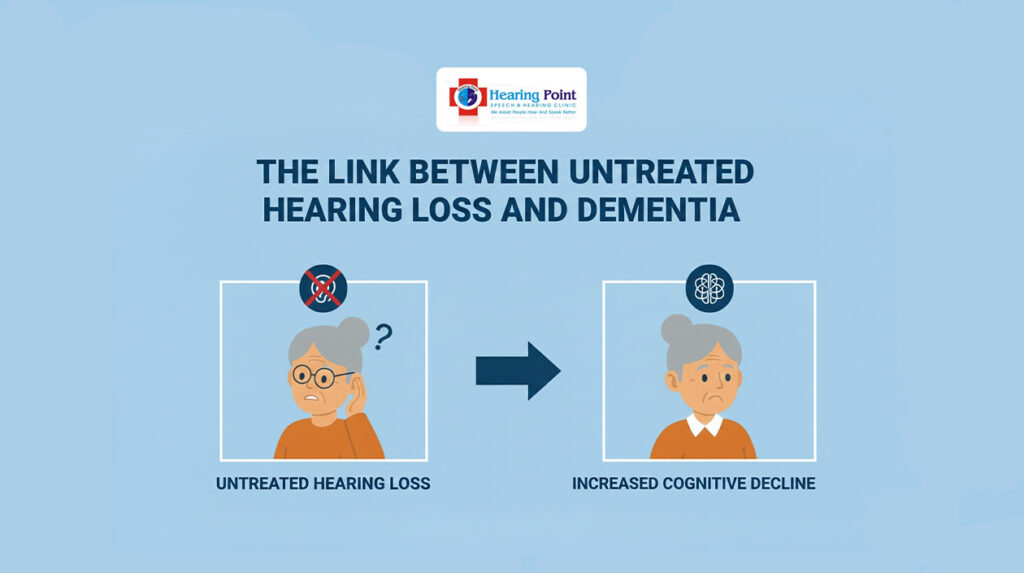
Many people think hearing loss is just an inconvenience — something that affects your ability to hear conversations or follow instructions. But research over the past decade has uncovered something far more serious: untreated hearing loss is strongly linked to cognitive decline and dementia.
In cities like Noida and Delhi-NCR, where loud noise, pollution, and busy lifestyles put constant pressure on our hearing, ignoring the early signs of hearing loss can impact not just communication, but long-term brain health as well.
At Hearing Point Noida, our audiologists witness daily how early detection and treatment of hearing loss help improve mental sharpness, social engagement, and overall well-being — especially among older adults.
Let’s explore how hearing loss and dementia are connected, the science behind this link, and what you can do to protect your hearing and cognitive health.
What the Research Says
Multiple long-term studies from leading institutions like Johns Hopkins and the World Health Organization show that even mild untreated hearing loss can double the risk of dementia, while moderate hearing loss can triple it. Severe hearing loss can increase the risk up to five times.
The connection is no longer speculative — it is one of the most well-documented relationships in modern health research.
How Hearing Loss Affects the Brain
Hearing isn’t just an ear function — it’s a brain function. When the ears do not send clear signals, the brain works harder to compensate.This constant strain affects how well you can remember, focus, and stay mentally active.
It’s like your brain is running a marathon every single day — all because it isn’t getting clear sound input. Treating hearing loss reduces this stress and keeps your brain healthy, sharp, and energized.
Here’s how untreated hearing loss can trigger cognitive decline:
1. Cognitive Overload: The Brain Works Too Hard
When hearing becomes difficult, the brain diverts extra energy to decode sounds.
This reduces the energy available for:
- Memory
- Decision-making
- Processing new information
Over time, this constant strain can accelerate mental fatigue and cognitive decline.
2. Reduced Brain Stimulation
The auditory cortex — the part of the brain responsible for processing sound — needs constant stimulation. Without adequate sound signals, this part of the brain begins to shrink, a process called brain atrophy.
This lack of stimulation is similar to muscles weakening when not used regularly.
3. Social Isolation and Loneliness
People with untreated hearing loss often withdraw from social interactions because conversations feel exhausting or embarrassing.
Loneliness and social isolation are known to increase the risk of:
- Depression
- Memory loss
- Dementia
Social interactions keep the brain active — when hearing loss disrupts communication, the brain receives less mental exercise.
4. Changes in Brain Structure
Recent MRI studies show that untreated hearing loss can physically change brain structure, particularly in regions responsible for memory and understanding speech. These brain changes mirror those seen in early dementia.
Why Older Adults Are Most at Risk
Age-related hearing loss (presbycusis) affects nearly 1 in 2 adults above 60 in India. In Delhi-NCR, exposure to noise pollution speeds this process even more.
When age-related hearing loss is ignored:
- Cognitive load increases
- Social interaction decreases
- Brain degeneration accelerates
This combination is a perfect storm for dementia.
Early testing at a trusted hearing care center in Noida like Hearing Point can prevent or slow this chain reaction.
How Treating Hearing Loss Reduces Dementia Risk
Good news: Recent studies show that hearing aids are one of the most effective tools for reducing dementia risk.
In fact, older adults with hearing aids show cognitive health very close to those with normal hearing.
Here’s how hearing treatment helps:
✔ Restores brain stimulation
✔ Reduces mental strain
✔ Improves communication and confidence
✔ Encourages social engagement
✔ Helps maintain memory and processing skills
Using hearing aids early — before hearing loss becomes severe — delivers the best cognitive benefits.
Hearing Aids: Your Brain’s Best Friend
Today’s modern hearing aids are not bulky, uncomfortable devices; they are smart, digital, discreet and packed with features like:
- Noise reduction
- Bluetooth connectivity
- Rechargeable batteries
- Directional microphones
At Hearing Point Noida, we specialize in digital and advanced hearing aid fitting, ensuring perfect customization to your needs, lifestyle, and hearing profile.
When Should You Worry About Hearing Loss?
You should get checked if you notice:
- Difficulty hearing in crowded places
- Trouble understanding soft or high-pitched voices
- Frequently asking people to repeat themselves
- Ringing in your ears (tinnitus)
- Feeling that people are “mumbling”
- Struggling with phone or video calls
If you experience one or more of these symptoms, schedule a hearing test in Noida as soon as possible. Early intervention is the key to healthy hearing and a healthy brain.
Hearing Loss and Cognitive Development in Children
The hearing and brain connection isn’t limited to seniors.
Children with untreated hearing loss may face:
- Delayed speech and Language development
- Language comprehension issues
- Learning difficulties
- Social and emotional challenges
Early diagnosis and intervention through pediatric hearing tests and speech therapy can prevent long-term developmental issues.
Protecting Both Hearing and Brain Health: What You Can Do
✔ Get annual hearing tests after age 40
✔ Use hearing aids if prescribed — don’t delay
✔ Reduce noise exposure in daily life
✔ Treat ear infections promptly
✔ Encourage socially engaging activities
✔ Maintain overall brain health through exercise and balanced diet
At Hearing Point Noida, we encourage patients to think of hearing care the same way they think of heart care or eye care — regularly and proactively.
Why Choose Hearing Point Noida?
As a leading hearing care center in Delhi-NCR, Hearing Point Noida offers:
- Complete hearing evaluations
- Digital hearing aid fittings
- Cochlear implant assessments
- Pediatric hearing services
- Speech & language therapy
- Tinnitus management
- Long-term hearing care support
Our goal is not just to help you hear better — but to help you live better, think clearer, and stay mentally active.
Conclusion
Hearing loss is more than an inconvenience — it’s a serious health issue that affects brain function, memory, and long-term cognitive well-being.
The link between untreated hearing loss and dementia is real, but the solution is simple:
- Recognize the signs early
- Get a hearing test
- Start treatment promptly
Your hearing is the gateway to your brain. Protect it today, and safeguard your cognitive future.
For expert testing and personalized treatment, visit Hearing Point Noida — your trusted partner in better hearing and sharper brain health.