
Delhi-NCR is one of the fastest-growing metropolitan regions in India — busy roads, metro construction, traffic jams, loudspeakers, and constant urban activity define everyday life. While adults may learn to ignore these noises over time, children are far more vulnerable.
Environmental pollution in Delhi is not just about toxic air; noise pollution is now one of the biggest threats to children’s health — especially their hearing, learning ability, concentration, and emotional well-being.
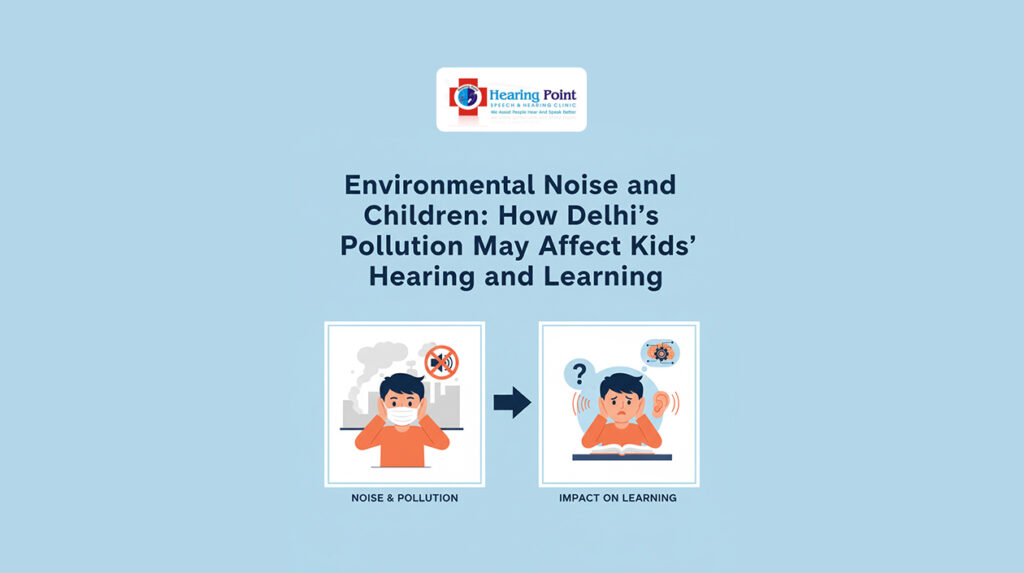
At Hearing Point Noida, we frequently meet parents concerned about their child’s delayed speech, poor hearing response, or difficulty concentrating — and in many cases, environmental noise exposure plays a major role.
This blog explores how Delhi’s growing pollution crisis impacts children’s hearing and learning, and what parents can do to protect their child’s development.
Understanding Noise Pollution in Delhi-NCR
Delhi is consistently ranked among the noisiest cities globally, with average noise levels of:
- 70–90 decibels (dB) in residential areas
- 90–110 dB in commercial and traffic-dense zones
- Above 110 dB near metro construction and highways
For children, prolonged exposure to noise above 70 dB is considered harmful.
Delhi’s continuous environmental noise exposes children to harmful levels during:
- School hours
- Travel and commuting
- Playground time
- Home environments near busy roads or markets
This constant exposure affects much more than just their hearing — it affects how they learn, focus, sleep, and communicate.
How Noise Pollution Affects Children’s Hearing
Children’s ears are more sensitive and still developing. Noise pollution can lead to hearing fatigue, temporary hearing loss, and even long-term damage.
1. Noise-Induced Hearing Loss (NIHL)
Repeated exposure to loud sounds damages the tiny hair cells in the inner ear.
Symptoms include:
- Difficulty understanding speech
- Delayed or unclear speech development
- Increased sensitivity to loud noises
- Frequently saying “What?” or not responding when called
If untreated, NIHL can become permanent.
2. Middle Ear Infections Triggered by Air Pollution
Delhi’s air pollution- especially PM2.5, PM10, smoke, and dust- can inflame the lining of the nose and nasopharynx, leading to Eustachian tube dysfunction. This inflammation increases the risk of ear blockage, middle-ear infections, and hearing-related problems.
Frequent ear infections can lead to:
- Conductive hearing loss
- Fluid buildup in the ear
- Balance problems
- Irritability and discomfort
Children with recurring ear infections often need early assessment at a hearing care center in Noida.
3. Tinnitus (Ringing or Buzzing Sounds)
Noise and pollution can irritate the auditory nerve, causing tinnitus.
Kids may complain of:
- Buzzing
- Ringing
- “Whistling” noises
Tinnitus often disrupts sleep and concentration — essential for growth and learning.
Impact of Environmental Noise on Learning & Development
Hearing health and learning are deeply connected. If a child cannot hear properly, they cannot learn properly.
1. Reduced Concentration
Children have limited ability to filter background noise. Constant honking, construction, or loud traffic makes it difficult to:
- Focus on schoolwork
- Pay attention in class
- Follow instructions
- Learn new concepts
Studies show that children in noisy environments score significantly lower in reading and comprehension.
2. Delayed Speech and Language Development
Because children learn speech by listening, noise pollution interferes with:
- Recognizing sounds
- Learning new words
- Pronunciation
- Understanding classroom communication
In Delhi-NCR, many children experience delayed speech and language development. Chronic exposure to high levels of environmental noise makes listening effortful, reducing the brain’s ability to clearly perceive and learn speech sounds during early childhood.
3. Behavioral and Emotional Problems
Constant noise exposure can increase:
- Anxiety
- Irritability
- Frustration
- Restlessness
- Sleep disturbances
Poor sleep further reduces attention span and learning ability.
4. Reduced Memory and Processing Ability
Environmental noise affects the brain’s ability to store and process information.
Children with chronic noise exposure may:
- Forget instructions
- Struggle with problem-solving
- Have low academic performance
Noise disrupts the neural pathways essential for learning.
Noise Pollution and CAPD
Noise pollution does not directly cause Central Auditory Processing Disorder (CAPD), but chronic exposure can worsen auditory processing difficulties in developing children.
How It Happens:
- Distorted Auditory Input: Background noise degrades speech signals, affecting auditory pathway development.
- Increased Listening Effort: Children strain to hear, leaving fewer mental resources for memory, comprehension, and learning.
CAPD-Like Symptoms:
- Difficulty understanding speech in noisy environments
- Poor auditory attention
- Trouble following instructions
- Weak auditory memory
- Academic struggles despite normal hearing
Noise acts as a risk factor, especially for children with frequent ear infections, speech delays, or learning differences.
Which Children Are at Higher Risk?
Delhi-NCR’s environment puts several groups of children at higher risk:
- Kids living near highways, metro sites, markets
- Children with existing speech delays
- Children with frequent sinus or ear infections
- Kids with ADHD or learning disabilities
- School-going children exposed to noisy classrooms/playgrounds
If your child falls into any of these categories, regular hearing evaluations are essential.
How Parents Can Protect Their Child’s Hearing & Learning
Despite the challenges, parents can take proactive steps to protect their child.
1. Schedule Regular Hearing Tests
At Hearing Point Noida, we recommend:
- Annual hearing screenings for all children
- Bi-annual tests for children living in high-pollution areas
- Immediate testing if your child shows hearing or speech issues
Early detection prevents long-term developmental problems.
2. Create a Quiet Homework Environment
- Keep the study area away from windows facing traffic
- Use sound-absorbing curtains
- Reduce unnecessary noise at home
A quiet environment improves concentration and memory.
3. Use Ear Protection in Noisy Areas
Kids should wear:
- Child-safe ear muffs
- Noise-reducing earplugs (recommended for festivals, weddings, traffic-heavy routes)
Especially when traveling during peak hours or visiting crowded places.
4. Maintain Ear Hygiene
- Never insert cotton buds or objects into the ears
- Keep ears clean with a soft cloth
- Visit a pediatric audiologist if your child complains of ear pain
5. Reduce Noise Exposure at Home
- Keep TV and music volume moderate
- Close windows during high-traffic hours
- Avoid noisy toys or gadgets
Even small changes help.
6. Treat Ear Infections Early
Don’t ignore:
- Fever
- Ear pain
- Fluid discharge
- Muffled hearing
Prompt treatment prevents conductive hearing loss.
Why Choose Hearing Point Noida for Your Child’s Hearing Needs?
Hearing Point Noida is a leading pediatric hearing care center in Delhi-NCR offering:
- Specialized hearing tests for children
- Speech and language development assessments
- Hearing aid fitting for kids
- Therapy for speech delays
- Guidance for parents on noise protection
Our child-friendly environment and expert audiologists ensure the best experience for every family.
Conclusion
Delhi’s pollution crisis is more than just an air-quality issue — it’s a hearing and learning crisis for children. Environmental noise affects their cognitive development, emotional health, and academic performance, while polluted air increases ear infection risks.
But with timely diagnosis, hearing protection, and professional care, parents can safeguard their child’s hearing and learning journey.If you’re worried about your child’s hearing or speech development, schedule a consultation at Hearing Point Noida today.
Healthy hearing = healthy learning.